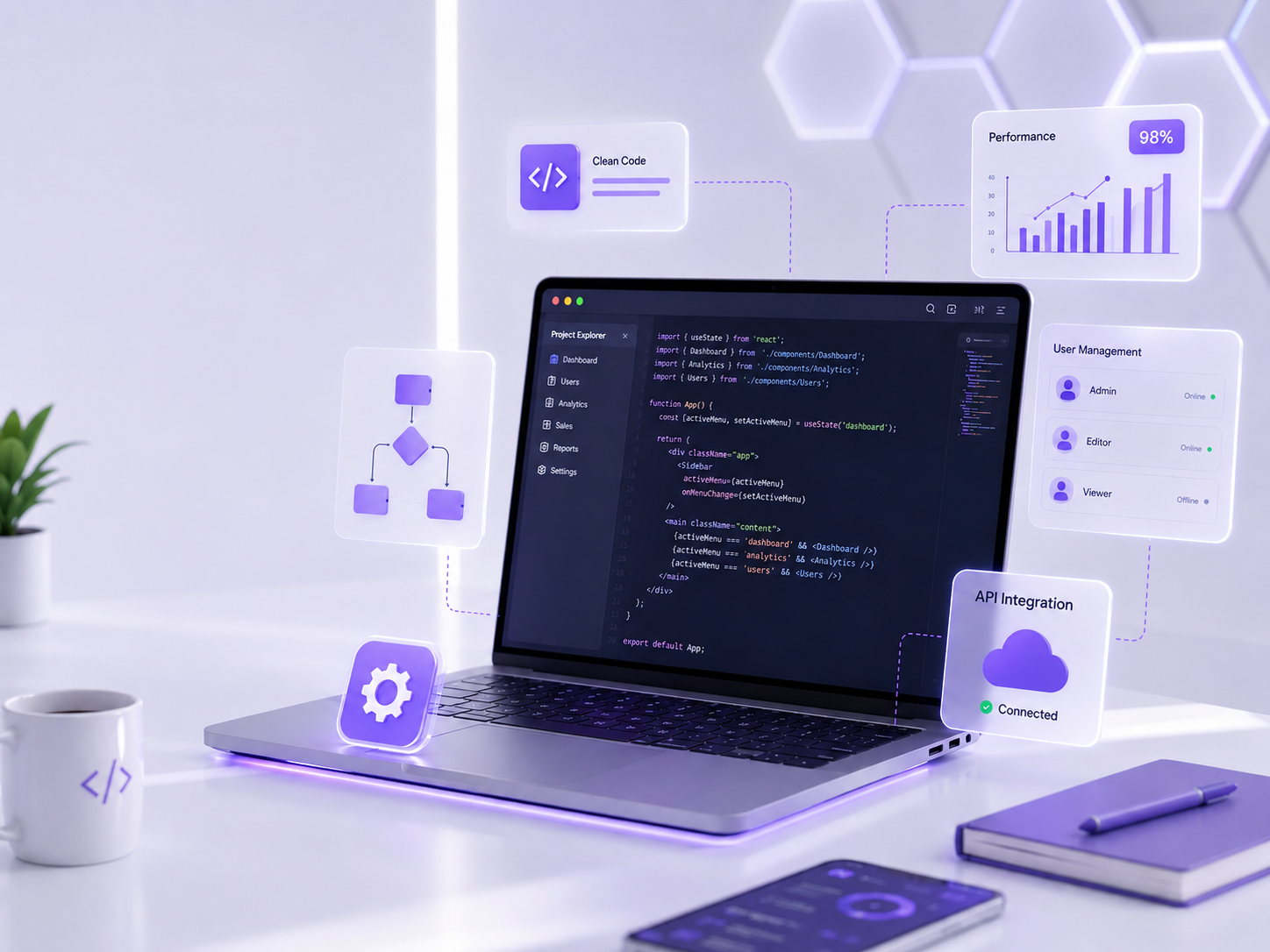
Operations dashboard
Enquiries, jobs, staff assignment and status tracking in one place with role-based visibility.
When off-the-shelf software almost fits but not quite, custom development removes the workarounds your team has quietly built around it.
Most businesses reach a point where their process is held together by spreadsheets, WhatsApp groups and one person who remembers how everything works. Custom software replaces that with a single system that matches how you actually operate — not how a generic product assumes you should.
We build web applications, SaaS platforms and internal tools with clear roles and permissions, audit trails, and APIs that let the system talk to whatever you already use.
Outcomes, not feature lists.
The software follows your workflow instead of forcing your team to adapt to someone else's assumptions.
Data lives in one place with defined ownership, instead of being scattered across files and inboxes.
People see and change only what their role allows, with an audit trail of who changed what.
A versioned API and modular structure mean new modules are added, not bolted on top of a fragile core.
We document the current workflow, including the informal steps nobody writes down.
Entities, relationships and permissions designed before any interface work.
The highest-value module ships first so the system earns its keep early.
Data migration, team training and a parallel-run period before the old process is retired.
Enquiries, jobs, staff assignment and status tracking in one place with role-based visibility.
Multi-tenant application with subscription plans, usage limits and a customer admin area.
Stock levels, purchase orders and fulfilment with reporting and exports.
A focused first phase typically runs a few months; a full platform is longer. We deliberately scope a phase one that is useful on its own so you are not waiting on everything before you get anything.
If the other system exposes an API or supports webhooks, yes. We confirm integration feasibility during discovery rather than promising it blind.
They usually do. Changes are quoted as scope adjustments so the impact on timeline and cost is visible before anyone commits to them.